 CF LOGISTICS
Why can returns be so costly for cross-border sellers?
Cross-border returns need a receiving address in Taiwan, followed by checks on packaging and signs of opening to decide whether goods can return to stock. CF LOGISTICS often receives unopened parcels after failed delivery and photographs damage for sellers.
“They’re usually completely unopened. More often, we can’t reach the customer, and the goods come back without ever having reached them.”
That is how the owner of CF LOGISTICS describes returns at the warehouse in Dayuan, Taoyuan. For a cross-border seller, an entry on a returns list does not necessarily mean a product has been used. It may never have reached the buyer at all. Knowing the condition of a returned parcel is the first step in deciding what to do with the goods.
At CF LOGISTICS, unopened parcels are the most common returns. Next come opened but intact goods, followed by items with missing accessories or parts that cannot be put back together, then visibly used goods. Check your own returns records to see which are most common in your store. Record the reason for return separately from the condition on arrival, so the word “return” does not automatically turn the whole product into a loss in your accounts.
Where can Taiwan buyers send returns if you are overseas?
Agree on returns handling with a warehouse in Taiwan first, and parcels can be sent there for receipt and inspection. Overseas sellers do not have to travel to Taiwan to receive each return themselves.
CF LOGISTICS handles returns in Dayuan, Taoyuan. Before working together, confirm the return address and receiving method, then check which details your sales channel requires. Getting a parcel delivered is only the first step: the person receiving it needs to identify the product and its order. Discuss which order information will accompany returns so we can match them to your records. A frequent difficulty with cross-border returns is that the seller cannot inspect the goods in person. A return notification may show only the reason entered by a buyer or carrier, without showing the outer packaging. Having someone receive and check the parcel in Taiwan lets you see the condition it came back in and decide what can happen next.
To work out how much can be recovered, compare that condition with the costs you will have to pay.
Can an unopened parcel go back into stock?
Goods with intact outer packaging and no signs of opening can return to stock if inspection confirms they are suitable. At CF LOGISTICS, unopened returns often result from failed delivery because the recipient could not be reached.
For these parcels, we first check whether they have been opened and whether the packaging is intact. Even if the return reason says the recipient was unreachable, we still need to receive the parcel and inspect it before deciding if it can go back into stock. A return notification alone is no reason to write off the product. It may never have been opened.
Returning an item to stock gives it another chance to sell. Remember the money already spent on the original order too. List the units suitable for restocking separately, then check the shipping costs for that batch of returns alongside inspection and storage fees. The selling price is not the amount recovered, and earlier expenses still belong in the calculation.
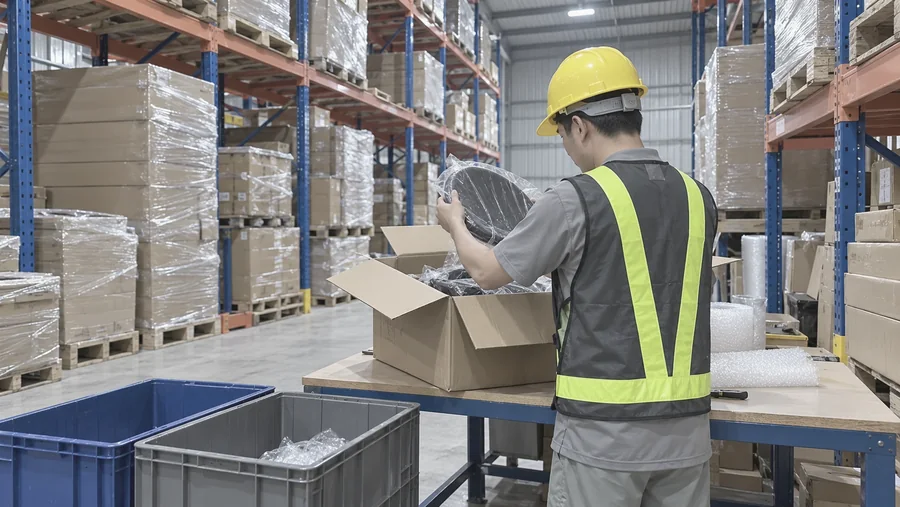
Why might an opened product be scrapped even if it looks intact?
Opened returns are often scrapped because the warehouse cannot establish whether any parts or accessories are missing. A product may look undamaged without showing whether everything inside is present.
In the owner’s words: “If the customer has opened it, there’s a high chance it will have to be scrapped, because we don’t know whether any parts are missing.”
Discuss this before arranging returns handling at an overseas warehouse. If products have inner packaging or accessories, send us the descriptions before starting so we can look at what needs attention during inspection. Looking at the outside cannot tell warehouse staff how many parts your product originally contained.
Whether it has been opened is separate from whether it is damaged or has all its accessories.
You may receive an apparently intact return and still be unable to tell whether accessories are missing. Discuss that uncertainty and how to handle it before putting the item back into saleable stock. An unknown missing part will still be a problem when the next order arrives.
How does CF LOGISTICS report damage found during inspection?
CF LOGISTICS photographs damaged goods for the seller and reports them as defective, leaving the seller to decide what happens next. We first check whether the packaging is intact and shows obvious signs of opening, then examine the damage.
Different conditions call for different next steps. Use this table to compare them:
| Condition on arrival | Handling direction | What the seller should check |
|---|---|---|
| Intact outer packaging, unopened | Suitable goods can return to stock after inspection | Match the product and order; do not rely only on the return reason |
| Obvious signs of opening | Often needs to be scrapped | An intact appearance may still leave missing parts uncertain |
| Confirmed damage | Photographed and reported as defective | Decide what happens next |
| Goods already marked as unwanted | Seller can collect them | Storage fees continue while they remain at the warehouse |
Photos let you see the damage even when you are outside Taiwan. You then decide whether to keep the goods and when to collect them. If the same SKU keeps coming back, compare the reasons with the photographs. Return counts alone cannot distinguish a product problem from packaging trouble or a delivery issue.
Do unwanted returns still incur fees while left at the warehouse?
Yes, goods left at the warehouse still incur charges.
Unwanted returns kept at CF LOGISTICS incur storage fees, and leaving them too long increases the cost. Sellers can arrange to collect them themselves. Once you decide not to sell the goods, discuss when they will be removed.
Keep goods awaiting action separate from stock you still intend to sell in your records, so you can see where money is still being spent. You may already have decided to scrap an item while it remains at the warehouse. Until it is collected, it still occupies space and storage charges continue.
If you are overseas, first find someone who can arrange collection for you, then agree on a time with the warehouse. You can discuss it before fixing a date, but “we’ll collect it later” still needs following up. How often to deal with these goods depends on what you keep and the storage fees agreed. You do not need to copy another seller’s schedule.
How can you estimate the cost of returns?
Start with the money already spent on the original orders, then add handling and storage after return to compare the available options. Calculate goods suitable for restocking separately from those you no longer want, so their costs do not get mixed together.
Use a returns list from a single month. Enter product costs and shipping already paid, plus other original order expenses. Add the agreed fees for receiving, inspection, restocking or storage. Deduct any fees refunded according to your records; leave amounts that have not been refunded in the calculation. This shows what the batch of returns has cost and which goods still have a chance to sell again.
With a warehouse in Taiwan receiving returns, someone can inspect the goods locally and put suitable items back into stock. When deciding whether to use a third-party warehouse, calculate this alongside everyday fulfilment and see which jobs you currently handle yourself can be handed over. See How does third-party warehouse pricing work? for storage and handling charges. If you are still comparing the overall shipping arrangement, read Overseas warehousing, consolidation and parcel forwarding compared.
What should you agree on before giving CF LOGISTICS your returns?
Agree on how returns will be received, what product information is needed for inspection, how defective goods will be handled and what it will cost. Settle that once and every batch of returned goods has a next step instead of sitting in a corner. A receiving address needs inspection and follow-up arrangements behind it.
CF LOGISTICS checks packaging and signs of opening after receiving goods, returns suitable items to stock and photographs damage for the seller. Send product descriptions and the returns situations you currently face. For example, most parcels might come back unopened, or you might frequently be unsure whether accessories are missing.
Call +886-978-167-019 or email cflogi@cfchunfeng.com. You can send the records from overseas and start with the type of return you currently find hardest to assess.
Read next
Contact
Whether your goods fit —
we can tell you once we see them.
Tell us what you sell, roughly how many SKUs, and how many orders a month. That is enough for us to work out a cost estimate for you.