 CF LOGISTICS
How does third-party warehouse pricing work?
Third-party warehouse fees include storage, inbound putaway, outbound handling and packaging materials. CF LOGISTICS charges NT$12–30 per pallet per day for storage and from NT$12 per item for item-level fulfilment, excluding tax.
How do you compare third-party warehouse fees? Start by separating the cost of keeping goods in storage from inbound and outbound handling, then account for packaging materials. When CF LOGISTICS receives an enquiry at our Dayuan warehouse in Taoyuan, we look at the products, SKU count, order volume and items per order together. Knowing how many pallets you need to store is not enough to calculate the full monthly bill.
Imagine two shipments taking up the same number of pallet spaces. One arrives and leaves as whole pallets. The other must be split into individual units, picked and packed against daily orders. They occupy much the same space but involve very different amounts of work. Pallet count alone will not tell you which quote is cheaper; picking and packing belong in the comparison. When a quote arrives, check which of the jobs you need done every day it already includes.
Are storage and outbound handling the same fee?
Storage pays for keeping your goods at the warehouse; outbound handling pays for picking and packing them for dispatch, and the two are charged separately.
Goods on the shelves incur storage charges. Once an order arrives, picking and packing it for handover to the carrier count as outbound work.
CF LOGISTICS prices storage by pallet position; loose goods that will not fill a pallet are quoted separately. Outbound work depends on how the goods leave. Coming in and going out by the pallet is one job; being broken down and picked item by item is a much bigger one. What you sell and how it moves shapes the number, so you do not have to choose a pricing method before asking for a quote.
If a quote says only “per order”, ask how many items that covers and how extra items are charged. A single-item order and a bundle require different quantities to be handled, even though both count as one order. Show the warehouse your usual order combinations so the quote reflects how you ship.
What does CF LOGISTICS charge?
Storage is NT$12–30 per pallet per day and item-level fulfilment starts at NT$12 per item. All figures below are indicative and exclude tax.
| Item | Indicative rate (NT$, excl. tax) |
|---|---|
| Storage | NT$12–30 per pallet per day |
| Item-level fulfilment | From NT$12 per item, tiered by the parcel’s length + width + height |
| Inbound putaway | From NT$3 per item; whole pallets are charged per pallet |
| Full-pallet dispatch | NT$120–150 per pallet |
| Packaging | Tape is free; other materials are charged by use |
Where storage falls in that range depends on the goods and how they stack; uniform cartons that stack high fit more on a pallet. Orders with several items carry an additional per-item charge, and value-added work such as repacking or inserting gifts is priced separately. Firm figures follow a look at your stock and shipping pattern, so bring the details covered below when you ask.
What do pallet, unit and volume charges measure?
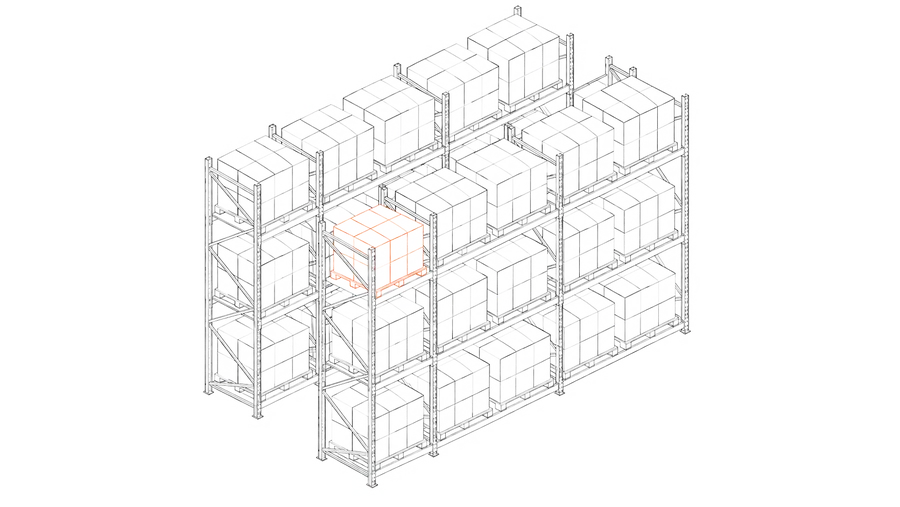
Pallet pricing counts the positions you occupy, unit pricing counts individual goods, and volume pricing measures the cubic space the goods themselves take up. We price storage by pallet position.
Before choosing a storage calculation, let us see the size of your goods, how many SKUs you have and how you plan to store them.
A standard pallet is roughly 100–110 cm square. CF LOGISTICS quotes one pallet as 100–110 cm in length and width and 100–160 cm high; each rack level in the warehouse is 180 cm tall. How the goods stack and how much room they need also depend on box dimensions, whether the boxes can be stacked and the total quantity in the shipment.
“Ten boxes” does not tell us whether they are small or large. Include their dimensions so the warehouse can work out how much space to reserve and discuss how to store them.
Volume is calculated from length multiplied by width and height. People ask whether we can charge storage on volume, and we do not: volume measures the goods, while what the warehouse actually loses is the whole pallet position, and the two numbers never line up. Dimensions still matter, because they tell us how much of your stock fits on a pallet and how many positions to hold. If you sell several products, do not use the smallest one to represent the whole shipment.
People comparing pallet and volume pricing often want to turn two quotes into a single comparable number, but converting floor area alone is not enough. Ask both providers to quote from the same product list and explain what each calculation covers. That is more useful than assuming how many units will fit on one pallet.
Is there an inbound putaway fee, including for whole pallets?
CF LOGISTICS charges a putaway fee, usually per unit, from NT$3 per item; goods that arrive and leave as whole pallets are charged per pallet instead. The owner describes it as “very inexpensive”. Explain how your goods arrive and leave, then agree on the amount before arranging delivery. Whole-pallet handling means a complete pallet comes in and a complete pallet goes out. If goods arrive on pallets but leave as individual units picked against orders, tell us when requesting the quote. Arriving on a pallet and shipping out as a pallet are different arrangements.
Confirm SKUs and barcodes during handover as well. Missing barcodes and mismatched product names have both held up inbound shipments here. List what needs attention before discussing the work and fees. Otherwise, a quote may cover ordinary putaway while the discussion about matching product records only begins after the goods arrive.
How are outbound fees calculated when an order has several items?
Multi-item orders carry an additional fee, so order count alone cannot estimate the month’s handling costs. Counting by order and counting by item are the same thing wearing different units; what actually moves the price is whether the goods leave by the pallet or have to be broken down and picked one at a time. Tell us how many orders you have, then show how many items usually go into each one.
For example, separate single-item orders from orders containing two or three items, and show which combination is most common in your store. If a promotion includes gifts or your own packaging, explain how the parcels should be packed. The closer those records are to your everyday shipments, the closer the quote.
For your own calculation, keep one column for order count and another for outbound units, with the agreed multi-item fees alongside them. Once rates are agreed, calculate using figures from the same month. Last month’s order count combined with this month’s unit count produces an average that cannot explain what you spent on either batch.
Who supplies packaging materials, and should that be agreed separately?
CF LOGISTICS usually supplies packaging materials. Tape is free; mailer bags, tamper-evident bags, stretch film, bubble wrap and cartons are charged by use, so agree which ones you need before working together. If you want your own cartons or gifts included, prepare a sketch or sample showing which packaging goes with which products and which orders receive gifts. We need to see what you want the buyer to receive. Different packing methods need their fees agreed too. CF LOGISTICS also offers repacking, so ask about damaged original packaging or switching to your own materials at the same time.
After agreeing on packaging, check the forecast quantity again before a major sales event. If the promotional bundles differ from everyday orders, explain what changes and how they should be packed.
Cartons still need someone to pack them. Arrange the materials and the staff together.
How can you compare two quotes without missing charges?
Compare quotes for the same stock over the same period, then check which handling tasks each covers. To calculate warehouse costs, use the table below and ask about anything the provider has left unspecified.
A blank space on a quote could mean a service is included or charged separately. That difference can matter a great deal.
| Item to check | What the provider should explain |
|---|---|
| Storage | Charging unit and billing period; how occupied space or quantity is determined |
| Inbound putaway | Which quantity is charged; how whole-pallet arrivals and departures are treated |
| Outbound handling | How pallet-out and item-picked work are each charged; extra charges for multi-item orders |
| Packaging | Who supplies it; which materials the quote includes |
| Returns | Agreed fees for receiving and inspecting returns, then putting suitable goods back into stock |
CF LOGISTICS has no minimum stock quantity or monthly order volume, but goods kept at the warehouse still incur storage fees, including returns. Unwanted goods left too long increase storage costs; you can arrange to collect them yourself. To estimate the returns portion, read Handling cross-border e-commerce returns and include goods awaiting a decision in your records.
What should you prepare before asking CF LOGISTICS for a quote?
Prepare product types, SKU counts, packed dimensions, monthly order volume and items per order, plus the inbound shipping method and expected arrival date. We discuss pricing according to the goods and fulfilment pattern; the rates above are ranges, and the firm figure depends on your stock.
Our warehouse in Dayuan, Taoyuan covers approximately 4,960 m², and CF LOGISTICS dispatches 3,000 to 5,000 orders daily. If you are planning your first delivery, allow about one month from agreement to goods arriving. You can discuss the quote and handover together. If a quantity is still uncertain, tell us your current estimate and which part may change. Once the shipment quantity is confirmed, check it against the quote together. You do not need to invent a fixed figure just to complete the information.
Email the details to cflogi@cfchunfeng.com or call +886-978-167-019. We will first compare the stock you need to store with your orders and packing requirements, then discuss each fee.
Read next
Contact
Whether your goods fit —
we can tell you once we see them.
Tell us what you sell, roughly how many SKUs, and how many orders a month. That is enough for us to work out a cost estimate for you.